Dane’s belt
MARRIED TO MY MASTER: A Bad Boy Hitman RomanceDane’s belt is more than a piece of clothing in the final scenes of Dane Bishop and Emily West’s story: it is a material link between a painful, complicated past and an intimacy they approach differently after marrying. Its recurrence gathers together memory, sexual play, and the distinction Emily draws between roughness she wants and abuse she does not.
First Association: A Dark Beginning
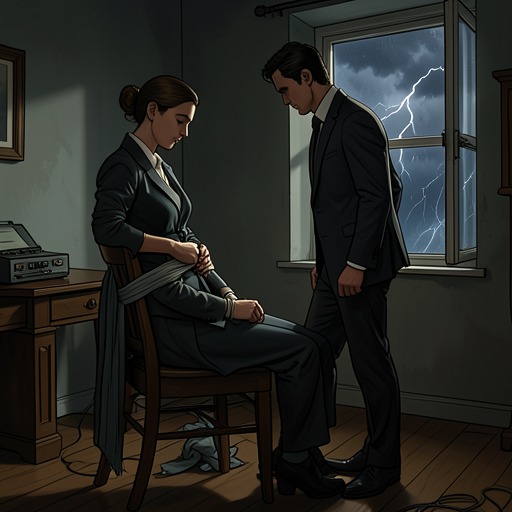
At the wedding ceremony, Dane looks at Emily and remembers their shared past through specific images, including the belt around her neck. The recollection belongs to a list of things he had done to her and things he had done for her, and it sits beside memories of her being restrained and of his stripping away her ego and clothes. The belt is therefore introduced not as a neutral accessory but as an object bound to an unequal and painful history.
The wedding scene does not erase that history or present it as uncomplicated romance. Dane recognizes that their beginning was dark, even as he understands it as passionate. Placed within that reflection, the belt holds the tension between those descriptions: it recalls conduct that could be coercive while also connecting to a sexual relationship that continues into their marriage. The object’s significance comes from this unresolved conjunction, not from any claim that every past action was welcome.
The Belt Returns on the Honeymoon
On the evening of their wedding, Emily lies on the bed in the honeymoon suite wearing special black lingerie. Dane has both the belt he wore and a vibrator he had earlier found in her bedroom. The belt’s return is deliberate in the scene’s structure: what had surfaced in his wedding-day recollection is now physically present between them again, alongside an object associated with Emily’s private space.
Dane folds the belt into a loop and strokes its leather along Emily’s cheek. When he says they have to save some fun for home, he frames the honeymoon encounter as part of an intimacy that will continue beyond the rented suite. The belt thus functions as a prop in their sexual play, but its force depends on its earlier history. It carries a memory of restraint into a scene shaped by their present relationship, making the couple’s past materially present rather than leaving it behind as mere backstory.
That repetition also marks a change in context, not a simple reversal of meaning. At the wedding, the belt appears in a retrospective account of what Dane had done to Emily. On the honeymoon, it is in his hand during an encounter between the newly married couple. The scene establishes its use in their play, while the following morning supplies the clearest account of how Emily understands the difference between such play and abuse.
Roughness, Care, and the Object’s Limits
As the sun rises, Emily lies beside Dane with bruises and painful marks from the previous night. He holds her closely, with himself as the big spoon and her as the little. The contrast between the marks and his tenderness is explicit: the physical aftermath of their rough sex is set against the care with which he cradles her.
Emily’s understanding is the scene’s crucial boundary. She knows that rough sex and abuse are different, and believes Dane would protect her and would not hurt her unless she wanted it. This belief does not make the belt harmless in every context, nor does it retroactively settle the meaning of their dark past. Instead, it identifies the condition that makes the object’s later use legible within their marriage: Emily distinguishes wanted roughness from abuse, and Dane’s protective tenderness supports that distinction in the closing scene.
Narrative Significance
The belt’s importance lies in its recurrence across a sharp change in narrative setting: first within Dane’s look back during the wedding, then in the honeymoon suite, and finally against the quieter image of the couple together at dawn. The sequence gives the object a history rather than a single fixed meaning. It links the remembered beginning to present-day play, while the morning scene shifts attention from the belt itself to the emotional and ethical terms that surround their intimacy.
As a result, the belt condenses a central tension in the couple’s ending. Their marriage does not begin from an untouched past; the story places that past in view even as it presents tenderness and a shared sexual life afterward. The object helps make the continuity visible, but it cannot resolve the tension on its own. The decisive distinction comes from Emily’s understanding of consent and abuse, and from the protection and care she associates with Dane in the final scene.